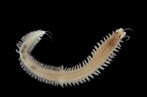
*Photos above © APEM
Technical Manager: Myles O' Reilly, SEPA
All enquiries about the component should be addressed to:
Component Administrator (2014-): APEM Ltd
The Invertebrate Component modules concentrate on different aspects of processing and analysis of marine benthic macrofaunal samples. They are based on quantitative analysis of grab or core samples of marine and estuarine sediments with a consequent focus on infaunal invertebrate species. Participants may also consider additional Particle Size (PS) modules to provide supporting data for macrobenthos surveys.
The modules are used as both training exercises and for assessment of analytical performance. In the United Kingdom all Competent Monitoring Authority (CMA) laboratories and their contractors undertaking statutory marine benthos monitoring programmes are required to participate in the NMBAQC Scheme or an equivalent scheme. The minimum level of participation in the NMBAQC Invertebrate Component is the Own Sample module, which provides auditing of a selection of real samples. Proper participation also requires completion of remedial actions raised in sample audits. Labs may opt for whatever additional modules they consider appropriate and are encouraged to participate fully to receive all the benefits of the exercises. Those laboratories reporting to the UK Clean Seas Environment Monitoring Programme (UK CSEMP) or the Water Framework Directive (WFD) programme must achieve the assessment targets and complete remedial actions to allow their data to be submitted to the DEFRA (MERMAN) database. Participants are provided with a new laboratory code each year to ensure anonymity.
Macrobenthic (MB)- currently suspended
One macrobenthic sample is supplied to the participant. The sample is an artificially prepared sample by the component administrator. The sample is pre-sieved in the field and fixed. The participant is required to process the sample (wash and sieve the residue), extract any contained fauna, and identify, count and biomass all the taxa before returning these (along with the sorted residue) to the contractor for audit.
The aim of the exercise is to ensure that the lab's standard operating procedures are effective and are able to deal adequately with a range of different types of samples. These may include difficult samples with large quantities of debris (eg. broken shells) or detritus (eg. terrigenous leaves or algal fragments), or numerous small taxa, or numerous fragments (eg. detached tentacles or brittle star legs). Similar targets are set as for the Own Sample Exercise although a pass/fail assessment is not applied for this exercise.
Please send notice of interest for this module to the Technical Secretary.
Ring Test (RT)
There are two Ring Test circulations supplied by the contractor to participating labs:
- Standard Ring Test of 25 invertebrate taxa from a broad range of marine or estuarine phyla.
- Targeted Ring Test of 25 invertebrate taxa from a specific fauna group or from a particular habitat.
The aim of the Ring Test training exercise is to enable participants to become familiar with a wide variety of invertebrate species, including taxa from a wide range of geographic localities or specified habitats to which they may not have access. The targeted Ring Test allows participants to hone their identification skills on taxonomically difficult faunal groups and provides access to verified specimens. The results of the Ring Tests are circulated in bulletins with accompanying images highlighting various identification issues. For some exercises participants may be allowed to keep the Ring Test material to add to the own invertebrate reference/voucher collection.
Own Sample (OS)
For the Own Sample module a complete benthic survey data set will initially be requested from which the three samples will be randomly selected. The three fully analysed benthic faunal samples, along with sediment residues, are supplied from the participant to the scheme contractor to be re-analysed. The selected samples must be split into individual species vials to facilitate the audit. For UK CSEMP laboratories the samples should be supplied from the previous year's CSEMP survey. For other laboratories samples should preferably be selected from International/National survey programmes.
The results of re-analysis audit are fed back to the participant with data on achievement of targets for sorting, enumeration, identification and biomass. Participants are always free to discuss comments with the component administrator or technical manager - the aim being to communicate openly and use the feedback to improve quality (e.g. identifying issues that participants may be unaware of or providing reassurance that laboratory methods are appropriate).
An overall PASS/FAIL criterion is applied to each Own Sample exercise. It is applied on a sample basis using a graded system related to the untransformed Bray-Curtis scores. The five tier system is as follows:
100% BCSI Excellent
95 - <100% BCSI Good
90 - 95% BCSI Acceptable
85 - 90% BCSI Fail Poor - Remedial action suggested
<85% BCSI Fail Bad - Remedial action required
Samples not reaching the required standards are flagged. The NMBAQC Committee has produced guidelines for remedial action and will resolve any remedial action queries. Remedial action completion is mandatory for laboratories submitting data to International/National programmes (i.e. UK CSEMP/WFD).
In cases where the CSEMP or WFD samples have failed to meet AQC targets, remedial action must be completed before the data are fully accepted for incorporation in the MERMAN and WFD databases. This is to ensure that national assessments on the status of the biological communities can be undertaken and that data is not compromised by differing methodologies/lab practices.
Laboratory Reference (LR)
One set of 25 identified invertebrate taxa to be sent by the participant to the contractor for validation. The material should be reference specimens from the lab's voucher collection.
The aim of the exercise is to enable labs to establish and maintain a collection of good quality reference specimens. This allows labs to get identification of voucher specimens verified. Specimens should be in good condition with supporting location and habitat information provided. Participants are permitted to include up to 5 problematic taxa of which the identity is uncertain or unknown. Discussion between contractor and participant over identification issues is encouraged so that all labs can ultimately benefit from any lessons learned.